Resilient Grid Gear Couplings: A Complete Guide to Heavy-Duty Power Transmission
About Resilient Grid Gear Couplings: A Complete Guide to Heavy-Duty Power Transmission
Reliable power transmission is essential for the efficient operation of industrial machinery. Motors, pumps, compressors, conveyors, gearboxes, and other rotating equipment require dependable shaft connections to transfer torque smoothly. Resilient grid gear couplings are designed to support these requirements by combining flexible power transmission with shock-load absorption and vibration control.
These couplings are particularly useful in demanding industrial environments where machinery operates under varying loads, frequent starts and stops, or challenging working conditions. Their flexible metallic grid element can help accommodate specified shaft misalignment while reducing the transmission of vibration and shock loads to connected equipment.
In this article, we explore what resilient grid gear couplings are, how they work, their benefits, applications, and the important factors to consider when selecting them.
What Are Resilient Grid Gear Couplings?
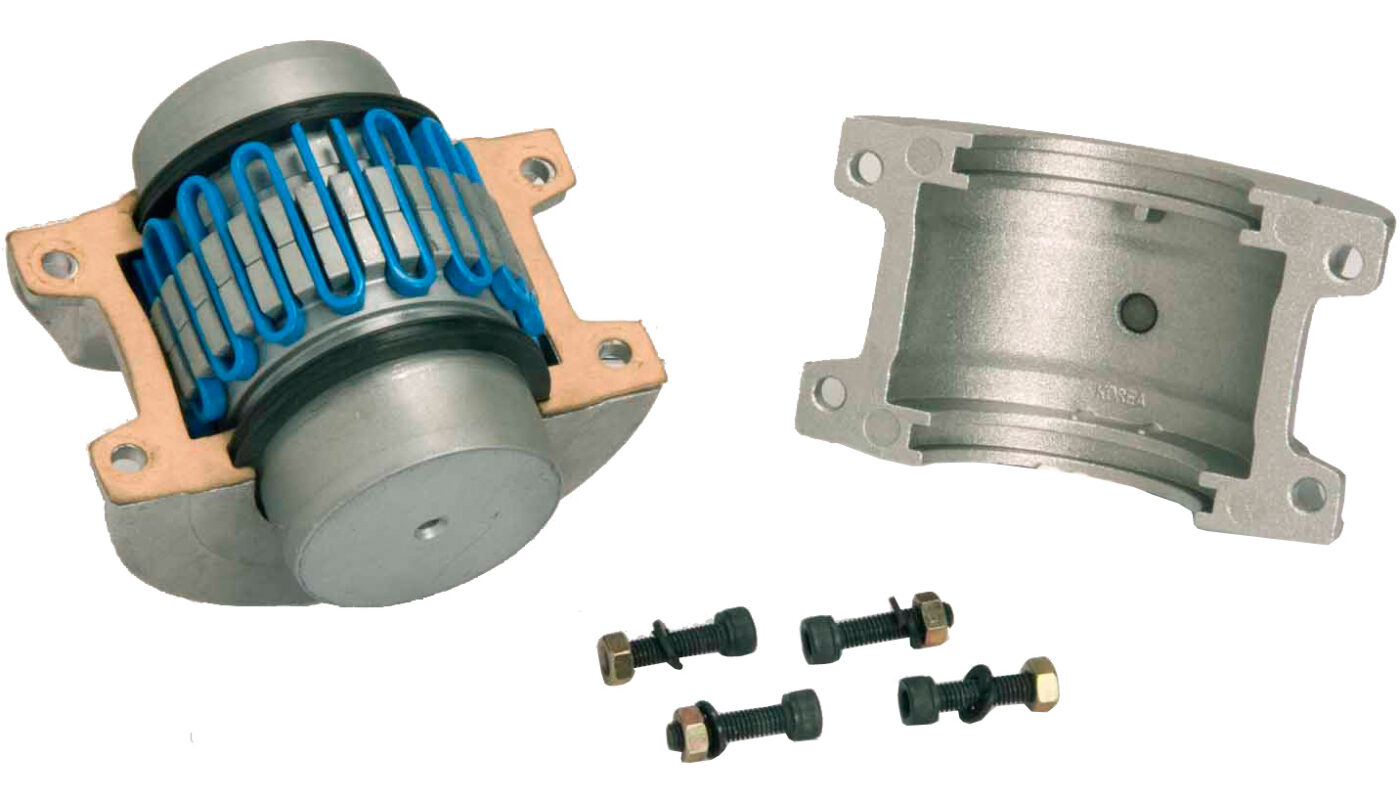
Resilient grid couplings are flexible metallic couplings used to connect two rotating shafts and transmit torque. A typical design consists of two hubs with grooves and a flexible grid element fitted around the hubs.
The grid acts as the flexible component of the coupling. Under normal operating conditions, it flexes to accommodate movement and damp vibration. As torque increases, the grid engages more strongly with the hub grooves, allowing the coupling to transmit higher loads.
Grid couplings are generally categorized as metallic flexible couplings and are used in medium- to heavy-duty applications. The grid element is commonly made from high-strength spring or alloy steel.
How Do Resilient Grid Gear Couplings Work?
The operation of a resilient grid coupling is based on controlled flexibility.
The driving hub is connected to the motor or other power source, while the driven hub is connected to the equipment receiving the power. The flexible grid element fits into specially designed grooves around the hubs.
When the driving shaft rotates, torque passes through the grid to the driven shaft. At the same time, the flexible grid can absorb part of the shock and vibration generated during operation.
This variable-flexibility behavior can help reduce peak loads and protect connected machinery. The exact amount of torque capacity, misalignment capability, and vibration damping depends on the coupling’s design and specifications.
Key Features of Resilient Grid Gear Couplings
Resilient grid gear couplings offer several features that make them suitable for industrial power transmission.
High Torque Transmission
Their metallic construction allows them to handle substantial torque loads when properly sized for the application.
Shock Load Absorption
The flexible grid element can absorb sudden changes in load, helping reduce mechanical shock transmitted to connected equipment.
Vibration Damping
The grid’s flexibility helps damp certain torsional vibrations and can contribute to smoother machinery operation.
Misalignment Compensation
Depending on the specific design, grid couplings can accommodate specified angular, parallel, and axial misalignment.
Replaceable Grid Element
In many designs, the flexible grid can be replaced without removing the connected machinery, helping simplify maintenance.
Durable Construction
Metallic components and appropriately selected materials provide durability for demanding industrial environments.
Benefits of Resilient Grid Gear Couplings
Protection of Connected Machinery
Sudden torque changes and vibration can place significant stress on shafts, bearings, gearboxes, and other components. A suitable grid coupling helps absorb these effects and reduce mechanical stress.
Reduced Downtime
A replaceable flexible grid can simplify maintenance. This can be particularly useful in industrial plants where minimizing equipment downtime is important.
Improved Operational Reliability
By accommodating specified misalignment and absorbing shock loads, resilient grid couplings can support reliable operation when correctly selected and installed.
Long Service Life
Properly engineered metallic grid couplings can provide dependable service over extended operating periods when operated within their rated conditions and maintained according to manufacturer recommendations.
Suitable for Heavy-Duty Applications
Grid coupling designs are widely used in medium- and heavy-duty industrial applications because of their combination of torque capacity and flexibility.
Applications of Resilient Grid Gear Couplings
Resilient grid gear couplings are used in many industries where reliable torque transmission is required.
Pumps
Industrial pumps often operate continuously and can experience varying loads. Grid couplings can provide a flexible connection between the motor and pump.
Compressors
Compressors require dependable power transmission and can experience dynamic operating loads. Properly selected grid couplings can help manage these conditions.
Conveyors
Mining, cement, manufacturing, and material-handling conveyors may use flexible couplings to transmit power between motors and driven equipment.
Fans and Blowers
Industrial fans and blowers can benefit from flexible shaft connections that help manage vibration and alignment variations.
Gearboxes
Grid couplings can connect motors, gearboxes, and other rotating equipment in industrial drive systems.
Heavy Industrial Machinery
Steel, cement, mining, power generation, and process industries use flexible coupling technologies in demanding applications where shock loads and high torque are common.
Resilient Grid Couplings vs. Gear Couplings
Although resilient grid couplings and gear couplings are both flexible metallic coupling solutions, their construction and operating characteristics differ.
Grid couplings use a spring-like metallic grid element that engages with grooves in the hubs. Gear couplings use gear teeth on hubs and matching teeth in sleeves to transmit torque.
Gear couplings can provide high torque capacity and are available in different configurations, while grid couplings provide torsional flexibility and shock-load absorption through their grid element.
The choice between the two depends on torque, speed, misalignment, environmental conditions, maintenance requirements, and the specific machinery involved.
Factors to Consider When Selecting a Coupling
Choosing the correct resilient grid coupling requires careful evaluation of the application.
Torque
Determine the normal, starting, and peak torque requirements of the equipment.
Speed
Check the coupling’s rated operating speed and ensure it is appropriate for the machinery.
Shaft Dimensions
Consider shaft diameters, bore requirements, keyways, and available installation space.
Misalignment
Identify the expected angular, parallel, and axial misalignment and compare it with the manufacturer’s permissible limits.
Operating Environment
Temperature, dust, moisture, chemicals, and other environmental conditions can affect coupling performance.
Maintenance Requirements
Consider whether lubrication, periodic inspection, or grid replacement will be required for the selected design.
Installation and Maintenance
Correct installation is essential for maximizing coupling life. Shafts should be aligned according to the manufacturer’s specifications, and hubs, grids, covers, and fasteners should be installed correctly.
For lubricated grid coupling designs, the specified lubricant and maintenance intervals should be followed. Grid couplings typically require lubrication because relative movement occurs between the metallic grid and hub teeth.
Routine inspections should look for excessive vibration, unusual noise, worn components, loose fasteners, lubrication issues, and signs of grid damage.
Conclusion
Resilient grid gear couplings provide an effective solution for industrial power transmission applications where torque capacity, flexibility, shock absorption, and vibration control are important. Their metallic grid construction allows them to transmit substantial torque while accommodating specified misalignment and reducing the effects of dynamic loads.
From pumps and compressors to conveyors, gearboxes, fans, and heavy industrial machinery, these couplings can contribute to reliable equipment operation when correctly selected, installed, and maintained.
Before purchasing a resilient grid coupling, it is important to evaluate torque, speed, shaft dimensions, misalignment, operating environment, and maintenance requirements. Selecting a coupling according to the actual application ensures dependable performance and can help protect valuable machinery from unnecessary mechanical stress.
Details
- Area
- India
- Category
- Business
- Listing ID
- #38985
More in Business

SoftProdigy
At SoftProdigy Systems, we harness the power of Artificial Intelligence (AI) and Machine Learning (ML) to enable intelligent…

AB’s Turnkey Projects – Office Interior Designers & Furniture Manufacturers in Pune
Writing AB’s Turnkey Projects Private Limited is a trusted provider of commercial interior design, turnkey interior solutions, and…

The Pristine Team Ltd
The Pristine Team Ltd provides a professional Short-Let Cleaning service in Birmingham for landlords, property managers, hosts, and…