
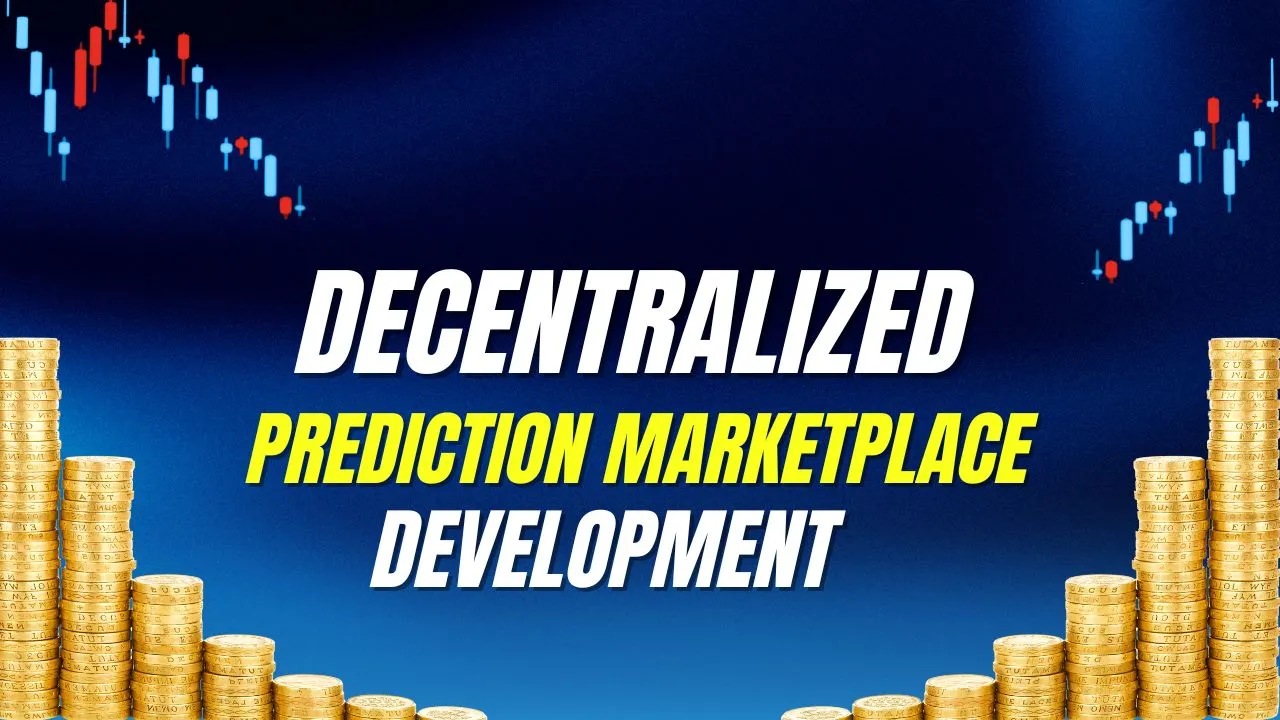
The Complete 2026 Guide to Decentralized Crypto Prediction Markets
- Condition: New
-
Textarea:
Decentralized crypto prediction markets are transforming how people forecast real-world events. By combining blockchain technology, smart contracts, and token-based incentives, these platforms create transparent, trustless environments where users can predict outcomes and earn rewards based on accuracy. In 2026, prediction markets are evolving beyond niche crypto communities into mainstream financial, political, and entertainment forecasting ecosystems. This rapid evolution is also driving strong demand for Decentralized Prediction Marketplace Development as businesses explore building their own blockchain-powered forecasting platforms.
How Decentralized Prediction Markets Work
Decentralized prediction markets use blockchain and smart contracts to let users forecast real-world events without intermediaries. The entire process, from placing predictions to receiving payouts, is automated and transparent.
1. Market Creation
An event is created with clearly defined outcomes (Yes/No, multiple choice, or numeric range) and a set resolution date.
2. Buying Outcome Shares
Users purchase shares in the outcome they believe will happen. Share prices reflect probability. For example, if a “Yes” share trades at $0.70, the market implies a 70% chance of that outcome.
3. Price Adjustment
Prices change dynamically based on supply and demand, often through automated market makers (AMMs). The market continuously reflects collective sentiment.
4. Smart Contract Escrow
Funds are locked in smart contracts, ensuring transparency and preventing manipulation or unfair withdrawals.
5. Oracle Verification
Once the event concludes, an oracle provides verified real-world data to confirm the result.
6. Automated Settlement
Smart contracts instantly distribute rewards to users who predicted correctly.
In short: users predict, the market adjusts, data is verified, and payouts are automated all without centralized control.
Core Technology: Blockchain, Smart Contracts & Oracles
Decentralized prediction markets are powered by three key technologies working together.
Blockchain
The blockchain acts as a transparent and immutable ledger. It records all trades, market rules, and transactions on-chain, ensuring security and eliminating centralized control.
Smart Contracts
Smart contracts are self-executing programs that manage market creation, hold funds in escrow, and automatically distribute rewards after outcomes are verified. They remove the need for intermediaries.
Oracles
Oracles provide verified real-world data (such as sports results or financial outcomes) to the blockchain. Once the outcome is confirmed, the smart contract triggers settlement.
Together, these technologies create a secure, automated, and trustless prediction ecosystem.
Tokenomics, Trading Models & Market Types
Decentralized prediction markets rely on clear economic design, efficient trading systems, and flexible event structures.
Tokenomics
Tokenomics defines how users interact with the platform. Tokens may be used for participation, staking, governance, rewards, and fee payments. A well-balanced model encourages liquidity, accurate predictions, and long-term sustainability.
Trading Models
Most platforms use:
Automated Market Makers (AMMs) for continuous liquidity and dynamic pricing
Order Books for direct peer-to-peer trade matching
AMMs are more common in decentralized ecosystems.
Market Types
Common formats include:
Binary (Yes/No)
Multiple Choice
Scalar (numeric range)
Together, these elements shape how value flows, trades execute, and markets operate efficiently.
Security, Compliance & Scalability in 2026
In 2026, decentralized prediction markets must balance protection, regulation, and performance.
Security
Strong security is essential to protect user funds. This includes smart contract audits, penetration testing, bug bounties, and secure wallet integrations. Since blockchain transactions are irreversible, proactive risk management is critical.
Compliance
Regulations vary by region. Platforms must evaluate legal classifications, KYC/AML requirements (if needed), and data privacy policies to reduce legal risks and ensure sustainable operations.
Scalability
As adoption grows, platforms need efficient infrastructure. Layer-2 solutions, optimized smart contracts, and strong liquidity models help manage high traffic and reduce transaction costs.
Together, these factors determine long-term reliability and growth.
Future Trends, Use Cases & Growth Opportunities
Decentralized prediction markets are expanding rapidly in 2026, driven by technology upgrades and broader adoption. This momentum is further accelerating innovation in Decentralized Prediction Marketplace Development as organizations seek scalable and regulation-aware solutions.
Future Trends
Layer-2 and cross-chain scalability
DAO-based governance models
Improved mobile and user experience
Enhanced liquidity mechanisms
Expanding Use Cases
Beyond speculation, prediction markets are being used for:
Financial and crypto forecasting
Corporate strategy and risk assessment
Policy analysis and market research
Growth Opportunities
With increasing transparency demands and institutional interest, decentralized prediction markets are positioned to become powerful forecasting and decision-making tools across industries.
Location



Information

Location
D 73 Chokkanathar Street 4th Stop, Thirunagar, Madurai: 625006, Tamil Nadu, India., Tamil Nadu, India, 625006
Contact Number
9500766XXX
Click to reveal phone number
Leave a Comment