Best 7 Wonders About the Great Wildebeest Migration Tanzania Tour Safari
Overview
-
Textarea:
Travel Company: Dav Safaris
Website: www.davsafaris.com
Email: info@davsafaris.com
Tel: +256757795781 / +25670141430
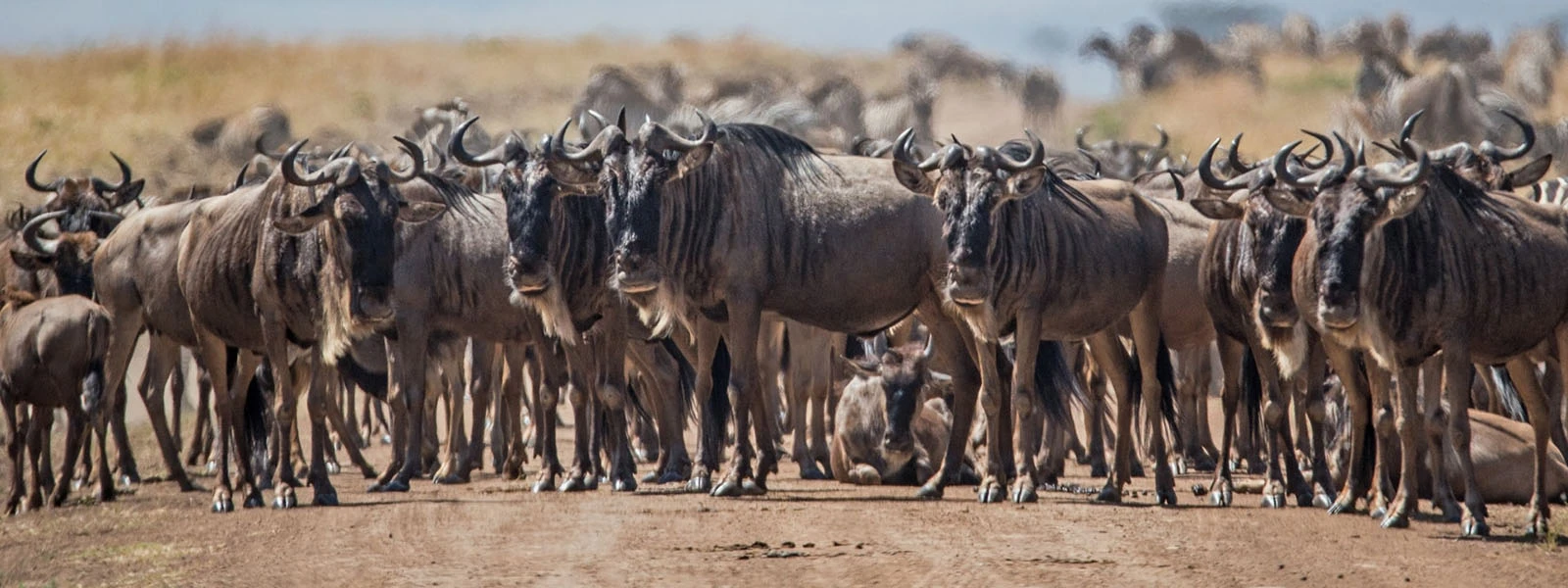
On a safari in Tanzania, river crossing during the Great Wildebeest Migration in the Serengeti, with crocodiles waiting and dust rising from thousands of hooves.
There are wildlife spectacles, and then there is the Great Wildebeest Migration. A safari in Tanzania puts you right in the middle of the greatest show on earth. Over two million wildebeest, zebras, and gazelles move in an endless, ancient circuit across the Serengeti. They chase rain and fresh grass. They give birth in waves. They cross crocodile infested rivers. Most people have heard of the Migration. But until you stand on the banks of the Mara River, dust in your throat, hooves pounding the earth, you do not truly understand it. These are the 7 wonders that will leave you speechless.
1. The River Crossing Is Pure Chaos and Courage
A safari in Tanzania shows you nature at its most honest. Nowhere is that more true than at the Mara River between July and October. Thousands of wildebeest gather on the dusty banks. One brave animal steps into the water. Then the flood begins. They pour down the steep banks, crashing into the brown water. Crocodiles explode from below. The current sweeps some away. On the other side, lions wait for the exhausted survivors. It is loud, dusty, terrifying, and magnificent. You will just stare with your mouth open.
2. The Calving Season Brings Half a Million Babies in Weeks
A safari in Tanzania during January and February takes you to the southern Serengeti plains. In just two to three weeks, over 400,000 wildebeest calves drop onto the earth. Watching newborns take their first wobbly steps within minutes of being born is unforgettable. The predators are watching. Lions, cheetahs, leopards, and hyenas all know that this season means easy food. New life and sudden death happen side by side. It is exhausting just to watch.
3. The Columns of Dust Can Be Seen from Space
A safari in Tanzania reveals that the Migration is not just about individual animals. It is about the sheer, overwhelming mass of them. When the herds are moving across open plains, they stretch for miles. Thousands upon thousands of wildebeest in long, dark columns. The dust they kick up rises in brown clouds so thick that satellites orbiting the earth can photograph it. The sound is a low, constant rumble of grunting wildebeest, clicking zebras, and the soft thunder of feet on dry soil.
4. Zebras Lead the Way, Not Wildebeest
A safari in Tanzania teaches you to watch carefully. Zebras are almost always at the front of the moving columns. Why? Zebras have better memories. They remember safe river crossings from previous years. They also have excellent eyesight and hearing. The wildebeest follow the zebras like nervous teenagers following a confident older sibling. Every time you see a zebra, remember. That striped animal might be saving the life of every wildebeest behind it.
5. The Grumeti River Has Monster Crocodiles
A safari in Tanzania between May and July brings you to the western corridor of the Serengeti and the Grumeti River. This is the first major obstacle of the Migration. The river is narrower than the Mara, but do not let that fool you. Crocodiles here grow up to five meters long. These are seasoned killers who have waited months for the herds to arrive. When the wildebeest try to cross, the crocodiles explode with shocking speed. You will not forget the sound of a crocodile's jaws slamming shut.
6. The Migration Never Stops, Even When You Cannot See It
A safari in Tanzania might leave you wondering where the herds go during the wet season. They disappear into the vast woodlands and hidden valleys of the Serengeti. But they never stop moving. During November and December, the short rains lure the herds back into Tanzania. They move south slowly. By April, they are scattered across the central and southern Serengeti again. The Migration is not a straight line. It is a messy, ancient circle.
7. You Can Follow the Same Herd for Your Entire Trip
A safari in Tanzania gives you a gift that no documentary ever can. Mobility. You are not stuck in one place watching the same river crossing day after day. If the wildebeest are gathering at the Mara River, your guide drives you there. If they have already crossed, you follow them. Some safaris even use small planes to jump ahead of the Migration. You step out of the plane, and there they are. A million animals grazing quietly. That feeling of tracking something so wild and so vast is the real wonder.
Best Time for the Great Migration on a Safari in Tanzania
For the famous river crossings at the Mara River, visit July to October. For the Grumeti River crossings, visit May to July. For the calving season in the southern Serengeti, visit January to February. For lush green landscapes and fewer tourists, visit November to December. For the general experience of seeing massive herds across open plains, June to October is ideal. Speak honestly with your tour operator. Tell them what you dream of seeing. They will tell you when to come.
How to Get to the Great Migration on a Safari in Tanzania
Most travelers fly into Kilimanjaro International Airport. From there, you drive to Arusha for a night. The next morning, you can either drive to the Serengeti or take a small domestic flight. Small planes leave from Arusha Airport and land at various airstrips inside the Serengeti. Your guide meets you at the airstrip, and you start your game drive immediately. Either way, a safari in Tanzania gets you to the Migration without too much trouble.
Where to Stay on a Safari in Tanzania
Accommodation ranges from simple tented camps to luxury lodges. The key is location. In the northern Serengeti near the Mara River, mobile tented camps move with the seasons. In the southern Serengeti during calving season, lodges like Ndutu Safari Lodge put you right in the middle of the herds. Book your accommodation at least six months in advance for the dry season. The best camps fill up a year ahead.
Why Book with Dav Safaris for the Great Migration on a Safari in Tanzania
Booking your safari in Tanzania with Dav Safaris means you have guides who eat, sleep, and breathe the Great Migration. They know which river crossing points are active. They know how to position the vehicle for the best light and the safest view. On a safari in Tanzania with Dav Safaris, you are not following a rigid itinerary. You are following the wildebeest. They handle everything. Airport transfers, park fees, meals, accommodation, and the endless logistics. You just wake up each morning, drink your coffee, and ask your guide one question. Where are they today?






Leave a Comment