
LawnCrafted Guide to Proper Lawn Watering and Fertilization
-
Textarea:
A healthy lawn does not depend only on mowing or seasonal cleaning. The real foundation of lush green grass lies in two essential practices: proper watering and effective fertilization. When done correctly, these two elements work together to create a strong, vibrant, and weed-resistant lawn.
At LawnCrafted, we focus on practical lawn care methods that help homeowners achieve long-lasting results. Understanding how to water and fertilize your lawn properly can make the difference between a patchy yard and a professionally maintained green space.
Understanding the Importance of Watering and Fertilization
Water provides the moisture needed for grass to grow, while fertilizer supplies essential nutrients. Without a balance of both, lawns become weak, dry, or overly dependent on artificial treatments.
LawnCrafted emphasizes that consistent care is more effective than occasional intensive treatments. A properly watered and nourished lawn naturally develops deeper roots, stronger grass blades, and better resistance to weeds and disease.
1. The Right Way to Water Your Lawn
Watering seems simple, but incorrect techniques are one of the main reasons lawns struggle. Many homeowners either overwater or underwater their grass, both of which can cause damage.
LawnCrafted recommends deep and infrequent watering instead of light daily watering. Deep watering encourages roots to grow deeper into the soil, making the lawn more drought-resistant and healthier overall.
Best Watering Practices:
Water 1–2 times per week depending on weather
Apply water early in the morning
Ensure soil is moist at least 4–6 inches deep
Avoid watering at night to reduce fungal growth
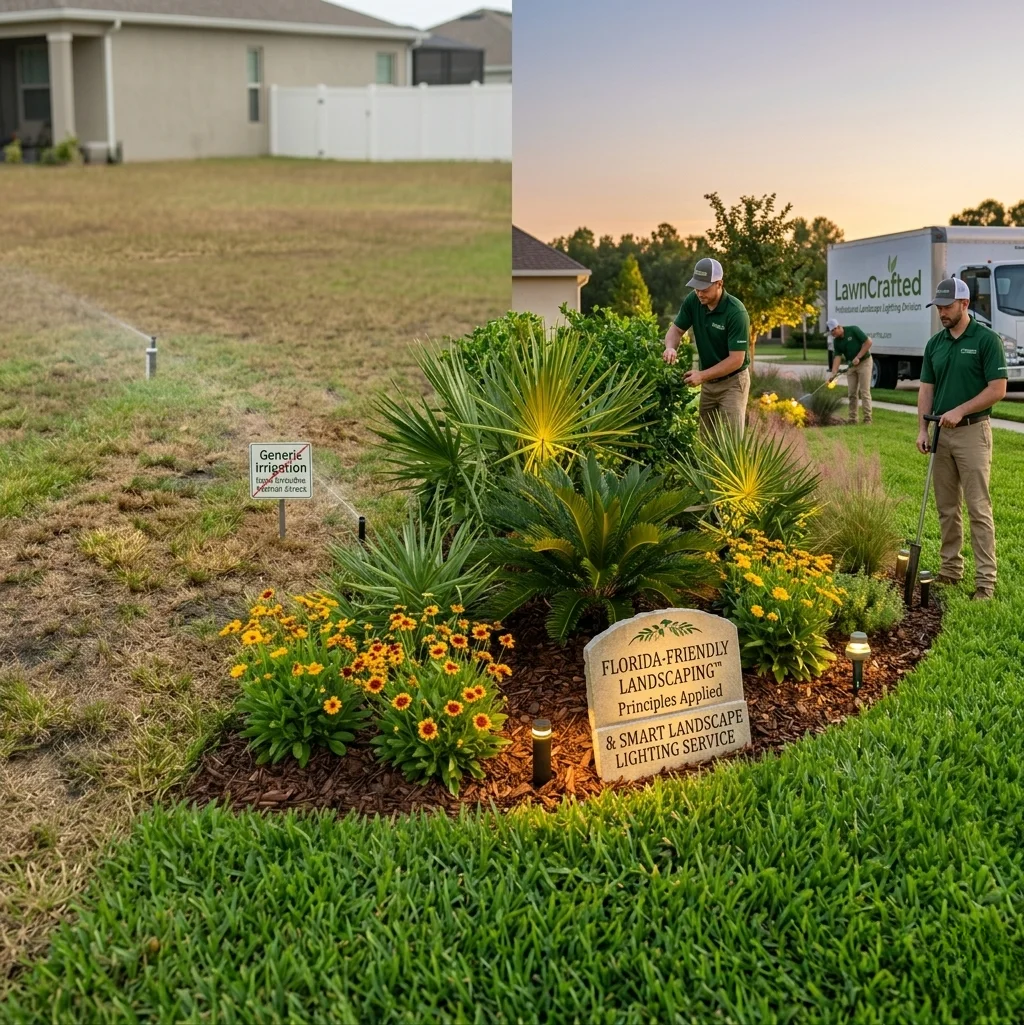
Efficient irrigation systems also play an important role in maintaining lawn health. Proper water distribution ensures long-term plant strength and prevents dry or overwatered patches.
Morning watering is ideal because it reduces evaporation and allows grass to dry during the day, preventing disease.
2. Signs Your Lawn Needs Water
A lawn will show clear signs when it needs watering. Recognizing these early helps prevent long-term damage.
LawnCrafted suggests looking for:
Grass turning bluish-gray
Footprints remaining visible on grass
Dry or brittle soil
Curling grass blades
Once these signs appear, deep watering should be done immediately to restore moisture balance.
3. Understanding Lawn Fertilization
Fertilization is essential for providing nutrients like nitrogen, phosphorus, and potassium. These nutrients support growth, color, and root development.
LawnCrafted explains that healthy soil alone may not always contain enough nutrients, especially in high-use or older lawns. Fertilizers replenish what the soil naturally loses over time.
4. Choosing the Right Fertilizer
Not all fertilizers are the same. Selecting the right type depends on your soil condition and grass type.
LawnCrafted recommends:
Slow-release fertilizers for long-term feeding
Organic fertilizers for natural soil health improvement
Balanced NPK formulas for general lawn maintenance
Using the wrong fertilizer can lead to uneven growth or even damage the lawn.
5. Best Time to Fertilize Your Lawn
Timing plays a crucial role in fertilization success. Applying fertilizer at the wrong time can reduce its effectiveness.
LawnCrafted suggests:
Spring fertilization for growth boost
Summer light feeding to maintain health
Fall fertilization for root strengthening
Fall is especially important because it helps grass recover from summer stress and prepares it for winter.
6. Over-Fertilization Problems
Too much fertilizer can harm your lawn instead of helping it. Excess nutrients can burn grass, promote weak growth, and pollute soil balance.
LawnCrafted warns homeowners to follow recommended application rates carefully and avoid frequent heavy applications.
7. Combining Watering and Fertilization
Watering and fertilization work best when combined strategically. After applying fertilizer, watering helps nutrients reach the soil and root zone effectively.
LawnCrafted recommends watering lightly after fertilization to activate nutrients without washing them away.
8. Soil Health and Its Role
Healthy soil is essential for both watering and fertilization effectiveness. Compacted or poor-quality soil prevents water and nutrients from reaching the roots.
LawnCrafted advises periodic soil testing and aeration to maintain proper soil structure and nutrient balance.
9. Common Mistakes to Avoid
Many lawn problems occur due to simple mistakes:
Watering too frequently but shallowly
Using excessive fertilizer
Ignoring seasonal needs
Applying fertilizer during extreme heat
Not checking soil condition
LawnCrafted emphasizes avoiding these mistakes for long-term lawn health.
10. Creating a Consistent Lawn Care Routine
Consistency is the key to success. Watering and fertilization should be part of a regular maintenance schedule, not random actions.
LawnCrafted recommends building a seasonal routine that includes:
Weekly lawn inspection
Scheduled watering days
Seasonal fertilization plan
Soil monitoring
This structured approach ensures long-term lawn improvement.
Conclusion
Proper lawn watering and fertilization are the foundation of a healthy, green, and resilient lawn. When done correctly, they promote deep root growth, strong grass, and natural weed resistance.
At LawnCrafted, we encourage homeowners to follow a balanced approach that focuses on consistency, timing, and soil health. With the right watering and fertilization practices, any lawn can be transformed into a vibrant and healthy outdoor space.
Location




Information

Location
Florida, United States of America
Contact Number
(434) 231-5XXX
Click to reveal phone number
Leave a Comment